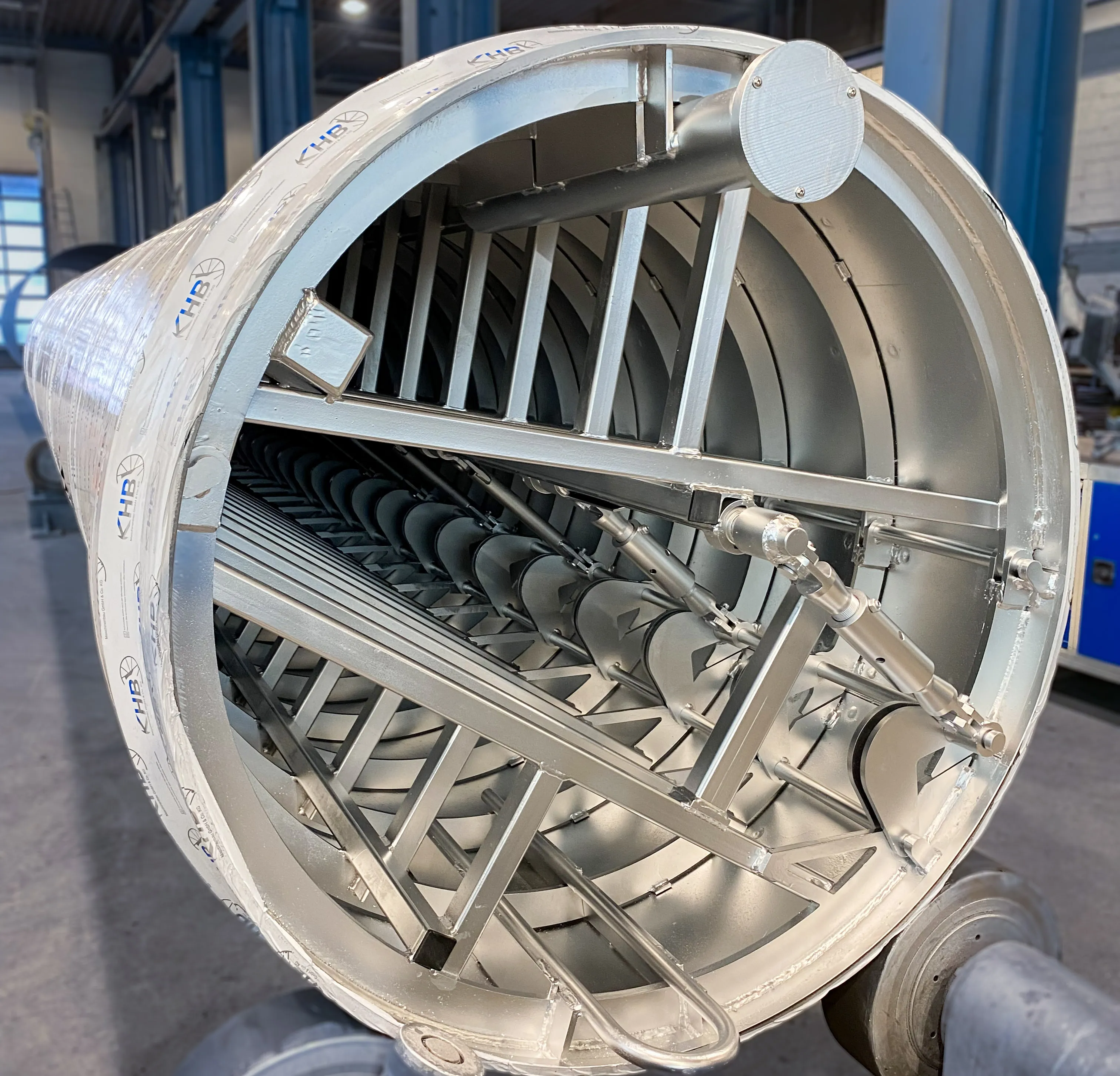
The turnkey concept of Stockage & Systèmes makes it possible to design installations within a global operating framework, respecting environmental and safety rules, technical performance and profitability for its customers.
Preferred partner for turnkey solutions
- Studies, drawings, process, layout
- Machining
- Tanks, scrubbers, bunds
- Pumps
- Unloading station
- DeNOx urea and ammonia installation
- Access walkways
- Ventilation networks
- Air engineering
- Instrumentation, control and command
- Handling, assembly
- Piping, valves, connections,
- Labelling and safety
- Commissioning, staff training
From the preliminary-design phase through to turnkey delivery, Stockage & Systèmes brings the experience gained over several hundred installations already delivered. Stockage & Systèmes undertakes to deliver installations that can be operated in complete safety. In the design phase, Stockage & Systèmes applies methods that integrate:
- Operating and maintenance operations
- The future working conditions of operators
- Compliance with prevention and safety regulations, thanks to continuous legal monitoring
- The experience gained over the many installations already delivered
- Ergonomics, a factor of safety and efficiency.

A solution for every installation
DeNOx, SNCR systems, from unloading to injection
Read more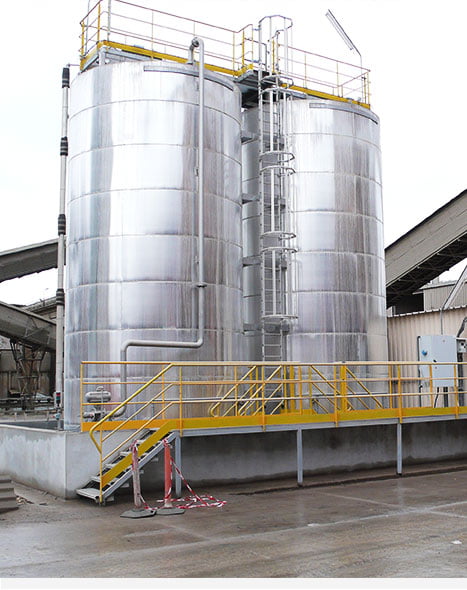
Urea dilution, AdBlue manufacture
Read more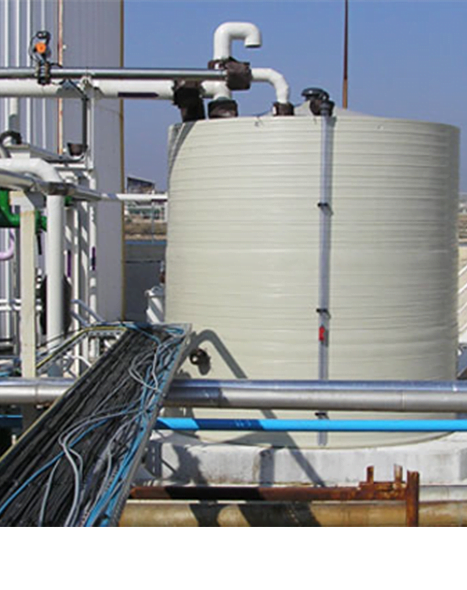
Sulphuric acid dilution, caustic soda dilution, etc.
Read more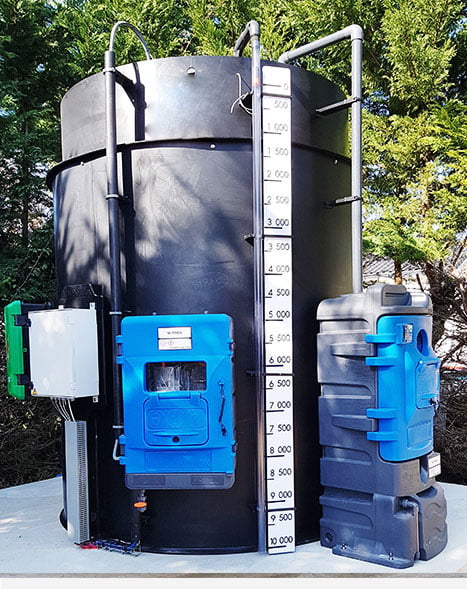
Odour treatment with calcium nitrate
Read more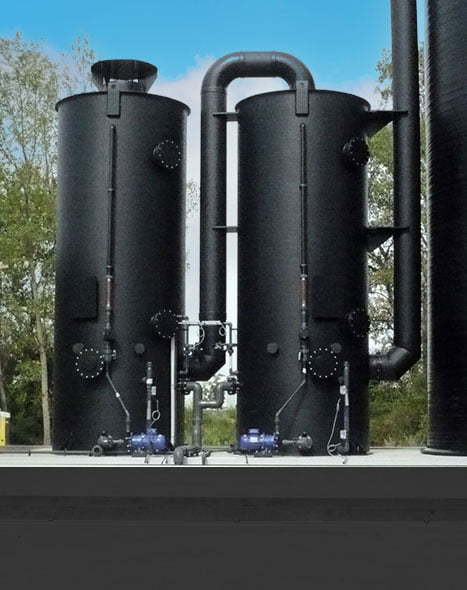
Gas scrubbers, scrubbing towers
Read more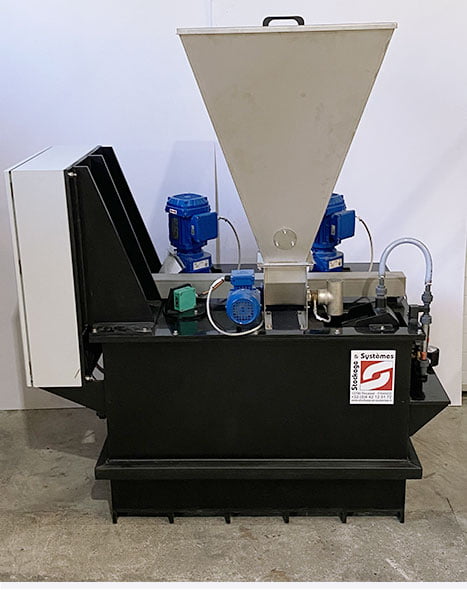
Automatic polymer preparation: POLYGROUP
Read more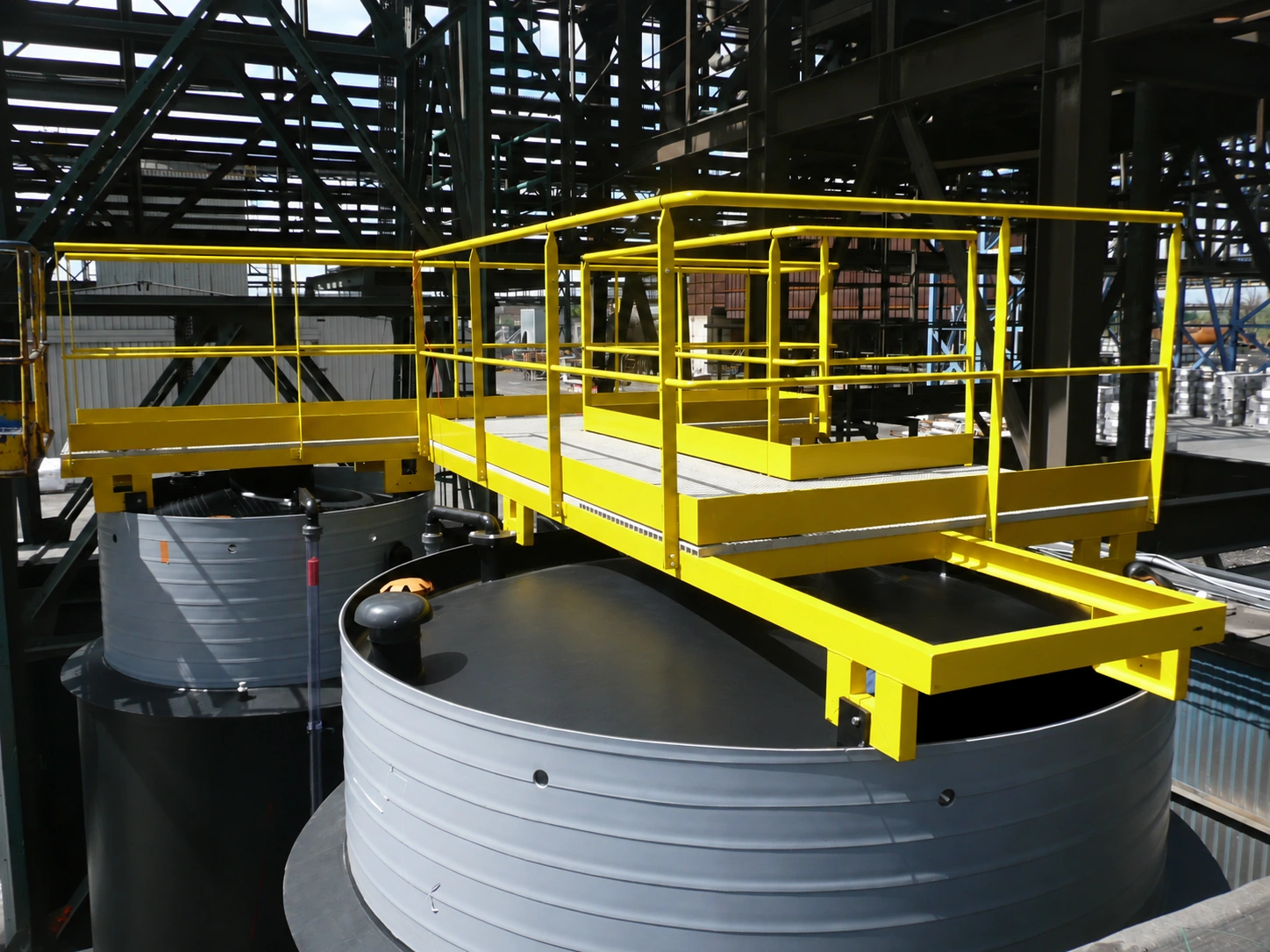
Walkways, caged ladders, stairways
Read more
Engineering, P&IDs, functional analyses, drawings
Read moreDeNOx, SNCR systems, from unloading to injection
NOx emission reduction: a demanding regulatory context
Nitrogen oxide (NOx) emissions result from the combustion of fuels in boilers, engines, furnaces, etc. At high temperature, the nitrogen and oxygen present in the air combine to form NOx, which include nitrogen monoxide (NO) and nitrogen dioxide (NO2). All energy-consuming activities therefore emit NOx. Recent or forthcoming international agreements require European states and other countries to reduce their atmospheric pollutant emissions significantly in the coming decade, in particular nitrogen oxide discharges. Industry, across all sectors, is required to comply with regulatory emission limit values. The quantities emitted by a given installation depend on two main factors:
- Combustion conditions (process control, combustion/incineration or co-incineration temperature)
- The possible presence of flue-gas treatment systems for this specific parameter.
The entry into force of the agreements adopted under the Kyoto Protocol required the signatory countries to reduce their greenhouse-gas emissions considerably. One of the recommended processes is the selective non-catalytic reduction of NOx (SNCR). A temperature of 900 to 1,200°C is required for the thermal reduction of nitrogen oxides. The quantity of reducing agent to be used is: 1 to 1.5 moles of NH3 per mole of NOx. 0.5 to 0.75 mole of urea per mole of NOx. From 2005, and in response to growing demand from some of its customers, Stockage & Systèmes developed efficient standalone systems suited to the industrial sectors most concerned because of the large quantities of nitrogen oxides emitted by their processes. With reductant injection flow capacities ranging from 100 litres/hour to 2,000 litres/hour, Stockage & Systèmes has delivered more than 30 turnkey SNCR installations for cement producers, the household-waste incinerators of Chartres, Lyon and Grenoble, oil companies such as TOTAL and glass manufacturers such as ST GOBAIN, in France and in several other European countries. Drawing on the experience accumulated by its technicians and engineers on the many SNCR systems already completed, Stockage & Systèmes provides the guarantees for custom, high-performance installations. From the preliminary-design phase through to commissioning, Stockage & Systèmes brings its know-how and delivers turnkey installations tailored to each project.
Documentation
Download our document to see the specific product data.
Technical data sheet
Installation_DENOX.PDF · 2,2 Mo
Urea dilution, AdBlue manufacture
Urea is most often used in industry as a reductant in SCR or SNCR installations. It is suitable for reducing nitrogen oxides in cement plants, household-waste incinerators, the glass industry and petrochemical industries. For the reduction of NOx from road vehicles, it is most often called AdBlue®. In recent years, its use has grown strongly, notably due to automotive engines and other road vehicles requiring the use of AdBlue®. Liquid urea is therefore manufactured exclusively on an industrial scale. Two methods are mainly used: the first consists in dissolving solid urea granules, known as prills, in demineralised water. The second consists in mixing synthetic urea with demineralised water.
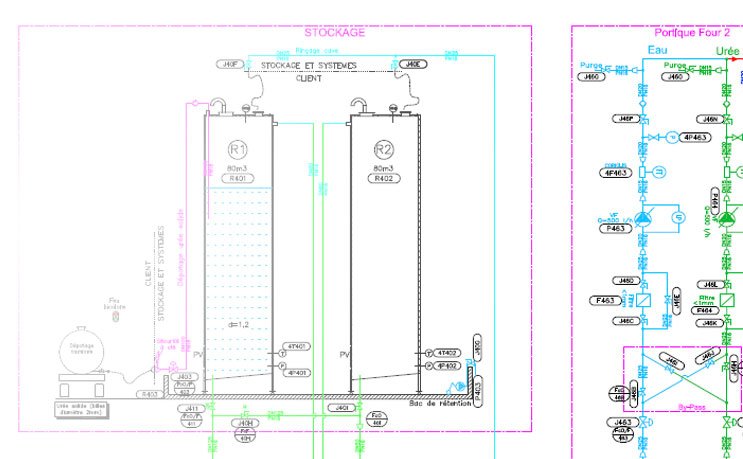
In recent years, Stockage & Systèmes has designed and delivered several installations specifically studied for the manufacture of liquid urea from prills. Drawing on its experience in chemical dilution, our technicians have developed reliable systems that take into account all technical, environmental and economic characteristics in order to deliver high-level services to our customers. Our urea manufacturing units can be combined with storage tanks manufactured by solid helical extrusion winding in high-density polyethylene (HDPE) to provide complete installations. Holding both the concentrated and the diluted product, our tanks are manufactured from highly resistant thermoplastics, guaranteeing our customers stable solutions with no risk of metallic contamination or decomposition.
Our urea dilution installations can have several levels of automation. The drop in urea temperature during dilution is controlled and the resulting mixture is held at a temperature that allows the system to operate without interruption. Production times can be adapted to each need.
- 2,000 litres/hour
- 3,500 litres/hour
- 20,000 litres/hour
The most frequently requested dilutions:
- Dilution from 96% to 50%
- Dilution from 96% to 40%
- Dilution from 96% to 25%
The main components of the system are:
- an unloading system that fills a urea “prills” tank
- a process-water supply (most often demineralised water) with a controlled flow rate
- a system that combines mixing principles to ensure effective mixing
- an in-line temperature-holding system mounted on the dilution skid
- a transfer skid for the resulting mixture to a final storage tank
The mixture is controlled by temperature sensors connected to the control system which, in the event of an alarm, triggers a shutdown procedure that secures the system.
Sulphuric acid dilution, caustic soda dilution, etc.
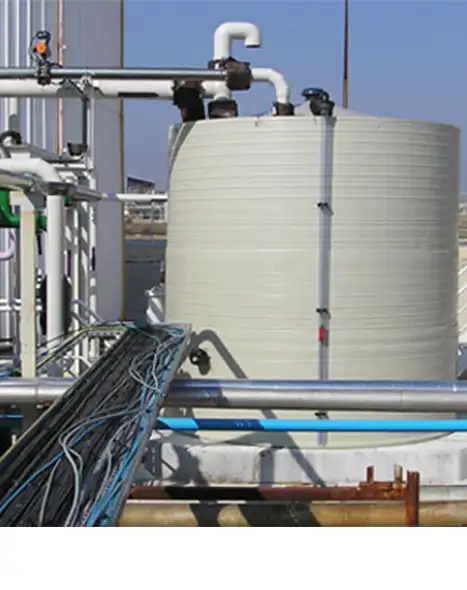
Our acid dilution units can be combined with spiral thermoplastic storage tanks to provide complete installations. Holding both the concentrated and the diluted product, our tanks are manufactured from highly resistant thermoplastics, guaranteeing our customers stable solutions with no risk of metallic contamination or decomposition. We can provide a complete range of services within a project, including full project management, installation, commissioning and training, guaranteeing efficient delivery and a complete transfer of knowledge. Our sulphuric acid dilution installations can include several levels of automation and produce diluted solutions from 5% to 80% from 96% or 98% sulphuric acid.
The mixing temperature is held at 25°C or 30°C as required thanks to an exclusive cooling system integrated into the dilution tank. Mixing times can be adapted to each request, for example:
- 2,000 litres/hour for a dilution from 96% to 25%
- 3,500 litres/hour for a dilution from 96% to 40%
- 5,000 litres/hour for a dilution from 96% to 50%
The most frequently requested dilutions:
- Dilution from 96% to 50%
- Dilution from 96% to 40%
- Dilution from 96% to 25%
The main components of the system are:
- A feed system in which the concentrated acid is positively delivered through a non-return valve
- A process-water supply (most often demineralised water) with a controlled flow rate
- A system that combines “static venturi” mixing principles to ensure effective mixing of the acid
- A fully thermoplastic “heat exchanger” type cooling system mounted internally to continuously cool the produced acid before transferring it to the storage tank.
The requirements for operating this dilution plant are:
- Three-phase electrical supply
- Compressed-air supply (6 bar)
- Demineralised-water supply
- Cooling-water supply
Odour treatment with calcium nitrate
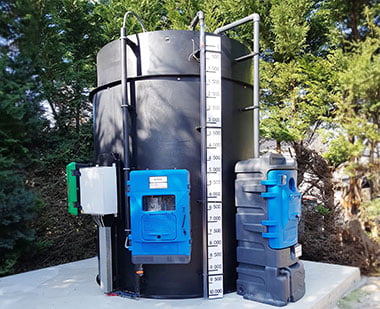
Odorous air pollution near certain industrial sites or municipal sanitation installations is increasingly controversial. An installation that complies with all sanitary and environmental air-pollution standards can still emit nuisance odours. Solutions exist to reduce this pollution, such as the calcium nitrate injection solution developed by YARA. Distributed in the sewer network via HDPE tanks and our unloading and dosing solutions, it blocks fermentation and therefore the formation of odorous compounds (for example: H2S). Our products can meet this type of need.
Gas scrubbers, scrubbing towers
Gas scrubbing consists in dissolving a polluting gas in a liquid. This liquid may be water or water with a neutralizing reagent added. It may be an industrial gas treatment system used in many applications such as natural-gas production, petroleum-gas recovery, chemical production, the metallurgical industry and power generation. For gases emanating from storage tanks as well as for specific installations with forced ventilation, Stockage & Systèmes will guide you in choosing the best solution.
Operation Gas scrubbers work by circulating contaminated gases through a series of separators, filters, coalescers and dryers, which remove impurities and produce a purified gas. Gas scrubbers can be custom-designed to meet the specific requirements of each application and can be designed to operate under high-temperature conditions.
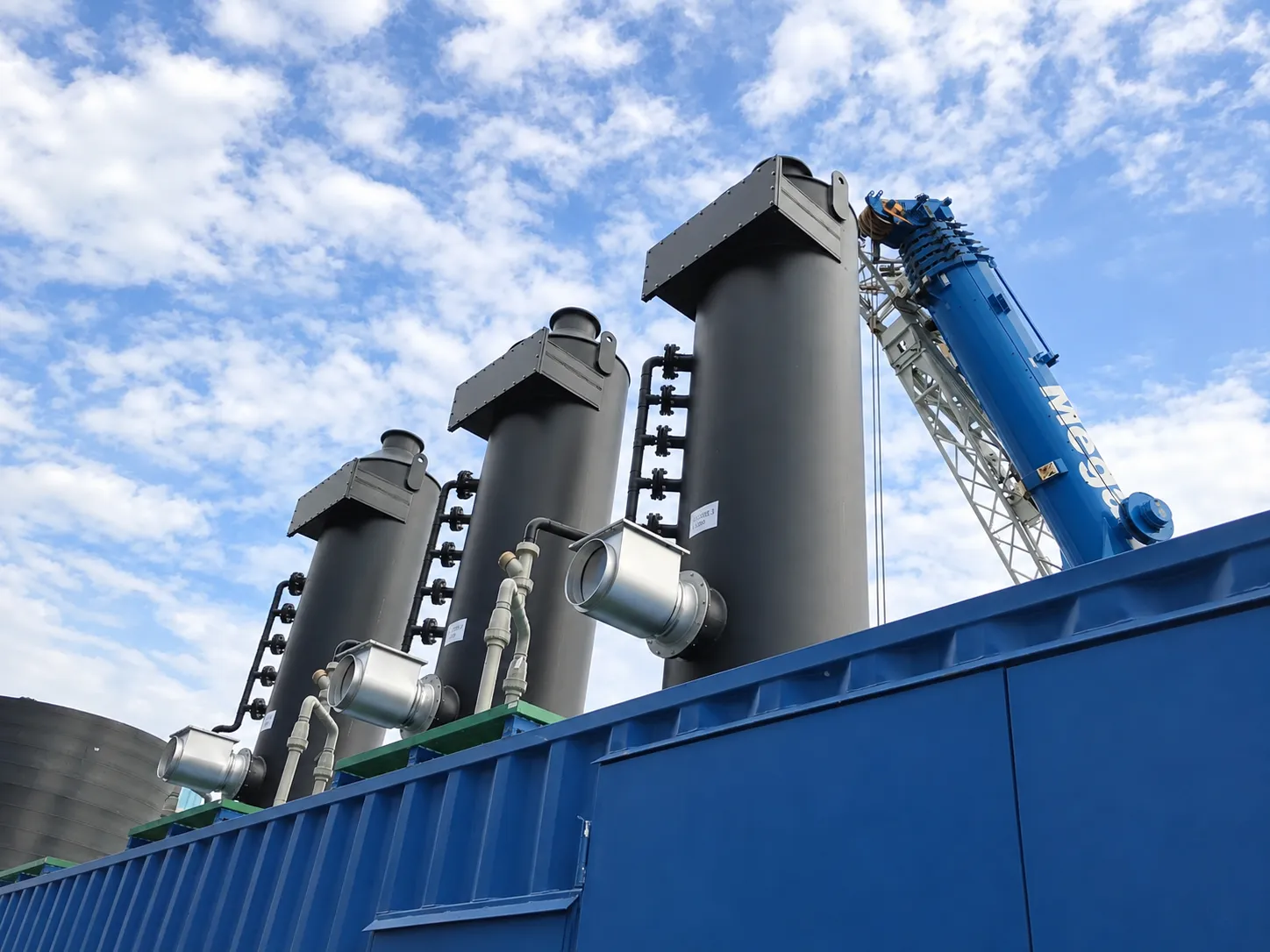
Necessary for several reasons, including: Environmental protection: Impurities in gases can cause environmental problems if they are released into the air or water. Gas scrubbers remove them to minimise environmental impacts. Safety: Impurities can be hazardous to workers and surrounding installations. Gas scrubbers eliminate them to ensure the safety of workers and installations. Quality improvement: Gas scrubbers improve gas quality, which can be important for certain industrial processes that require a high-quality gas. Economic performance: Gas scrubbers extend equipment service life, reduce maintenance costs and increase process efficiency by removing impurities.
The 3 main types of scrubber:
- Once-through water scrubbing
- Recirculating scrubbing for better control of water consumption
- Scrubbing with in-situ neutralisation
Automatic polymer preparation: POLYGROUP
Polygroup® is a range of automatic polymer preparation units from emulsion or powder. In response to the demanding requirements of water treatment and sludge treatment, Polygroup® supports manufacturing processes and the resolution of environmental problems with an excellent performance / footprint / ergonomics ratio. Combining the various mechanical solid-liquid or liquid-molecule separation processes with Polygroup® SE (emulsion polymers), Polygroup® SP (powder polymers) or Polygroup® SX (combined emulsion and powder) means gaining in efficiency and improving separation yield. For solid-liquid phase separation processes, the use of preparation units such as Polygroup® SE, Polygroup® SP or Polygroup® SX and, more generally, the use of polymers or flocculants, is essential in many applications:
- Water treatment (drinking water and industrial water)
- Wastewater treatment
- Urban and industrial sludge treatment (centrifuge, filter presses, etc.)
- Paper industry
- Fine chemicals (pharmaceuticals, etc.)
- Heavy chemicals (mineral processing, fertilisers, petrochemicals, etc.)
Documentation
Download our document to see the specific product data.
Technical data sheet
Preparantes_polymeres_POLYGROUPFR.pdf · 1,2 Mo
Walkways, caged ladders, stairways
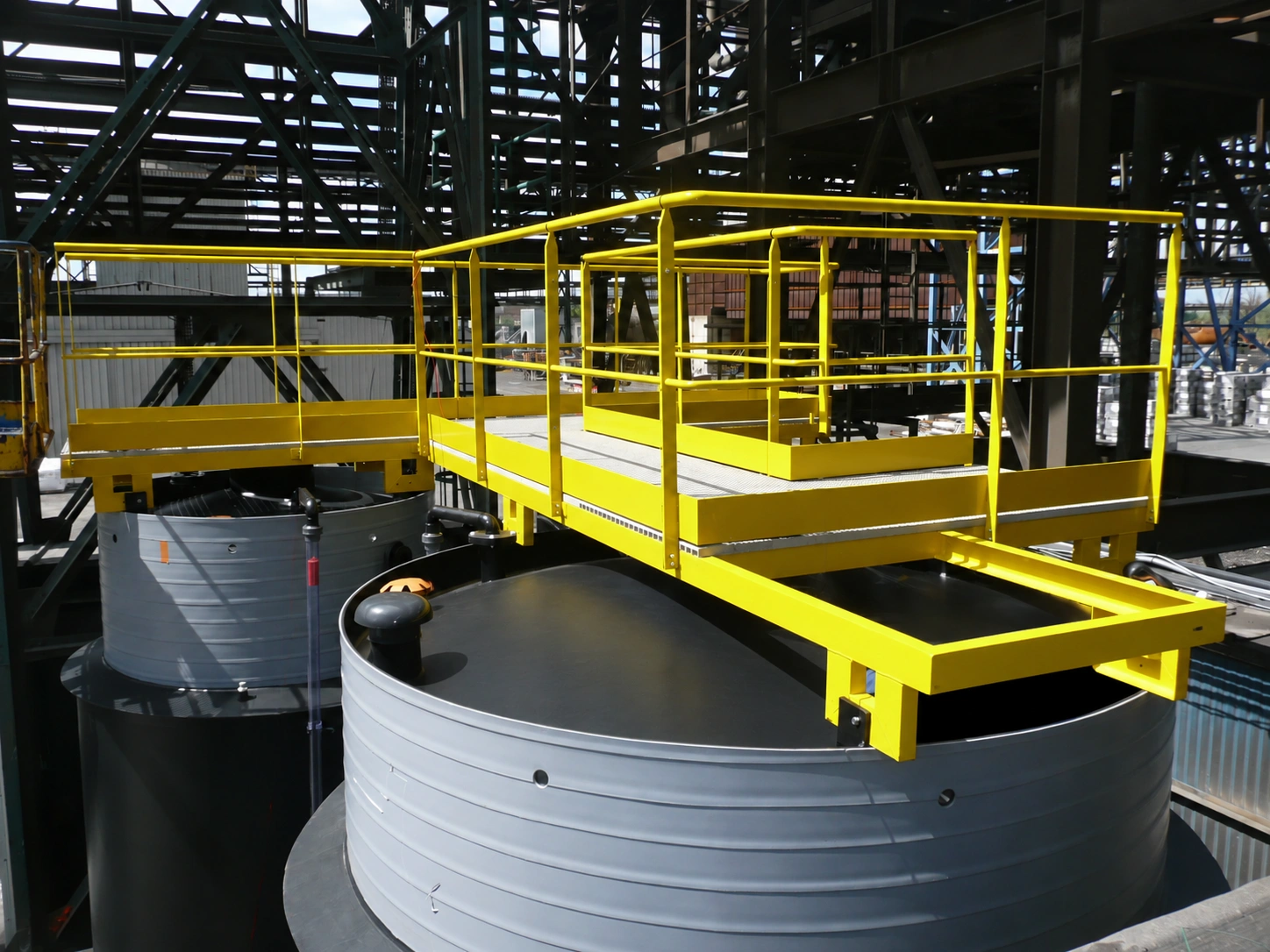
Walkways suited to our tanks, caged ladders, stairways In a turnkey project or simply for an existing installation, our team can study and secure access and circulation in your storage area. After studying the customer’s need, the walkways are calculated by our design office to ensure optimal strength for increased safety. They are then assembled in our premises by our experienced technicians. Finally, if the customer requires it, the assembly can be erected on site by our teams, as with all our storage products. To resist the most corrosive environments, our platforms and other access structures are mainly made from pultruded glass-reinforced polyester (GRP) profiles and polyester-resin grating. The grating is most often 19 × 19 mm square mesh in order to comply with the 20 mm ball standard. This type of material addresses the corrosion issue in chemical storage and transfer installations. Our main structures offered:
- Walkway: beams and tubes in reinforced polyester, anti-slip grating in polyester/glass-fibre composite
- Stairways: beam and handrail in anti-slip polyester/glass-fibre composite grating
- Caged ladder: ladder with cage guardrails to standard, tubes in reinforced polyester
- Gate: lockable, tubes in reinforced polyester
Engineering, P&IDs, functional analyses, drawings
Our team of experienced engineers works closely with our customers to understand their unique needs and provide tailored solutions. We use advanced technologies to guarantee the quality, reliability and safety of our installations. Our engineering services include the design, construction, installation and commissioning of tanks, vessels, silos, bulk storage systems and other associated equipment. We also offer maintenance and repair solutions to ensure the longevity and proper operation of our installations. We are proud to work with companies of all sizes in various industrial sectors, including chemicals, food processing, petroleum products and specialty chemicals. We are able to provide storage solutions for products as varied as corrosive chemicals, petroleum products, specialty chemicals, food products and pharmaceuticals.
For us, customer satisfaction is our absolute priority. We are committed to providing superior-quality solutions, personalised services and ongoing support throughout the life cycle of our installations. Contact us today to discuss your chemical storage needs and discover how we can help you achieve your objectives.